Apple’s first foldable pairs a pocketable design with a standout inner screen, giving iPhone loyalists a compelling but costly reason to try foldables.
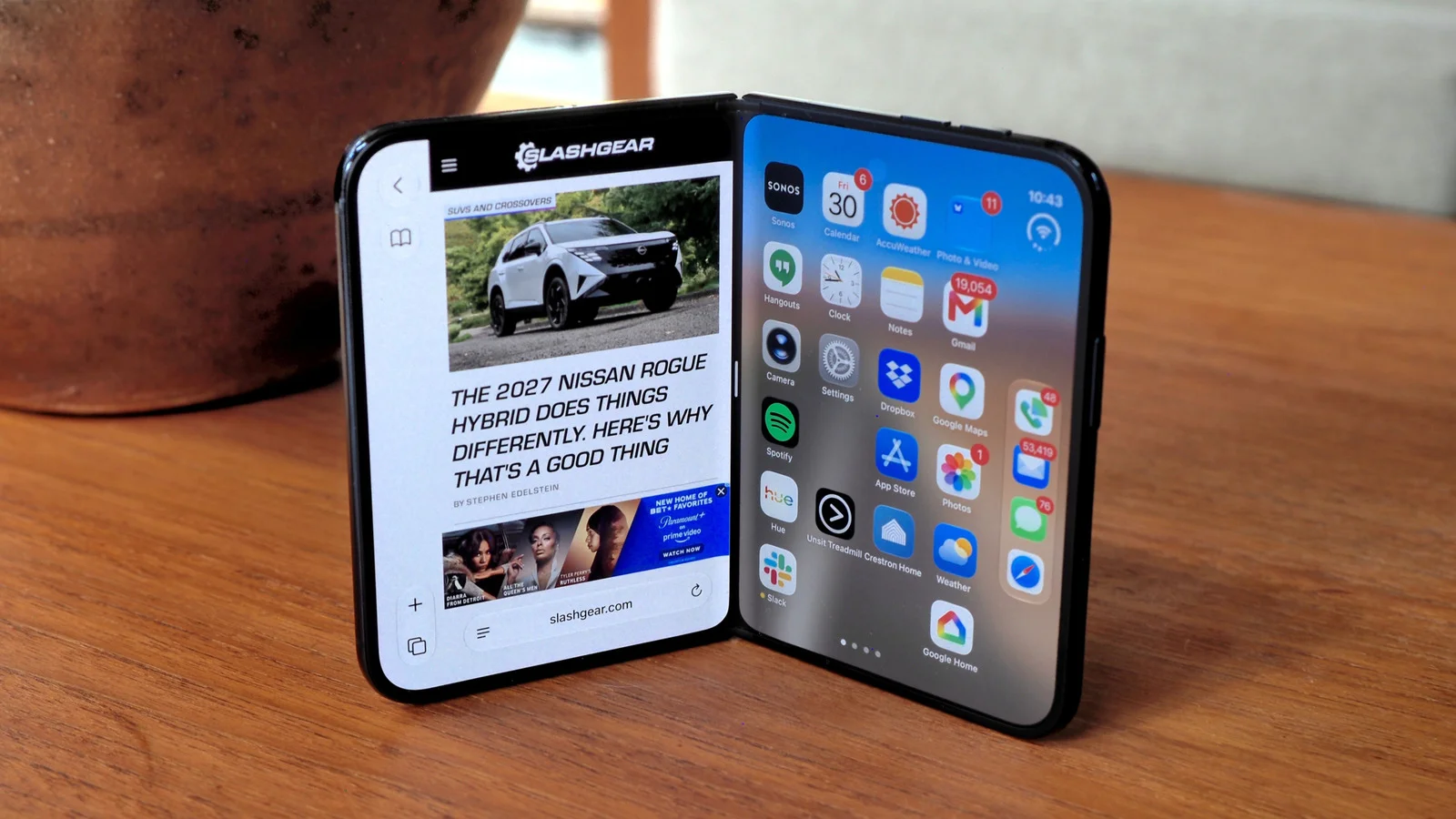
Apple’s foldable makes the category harder to dismiss
In 2019, people laughed when I opened one of the first foldable phones to take a photo. The iPhone Duo gives that old experiment a more serious answer: seven years on, foldables have stuck around, and Apple’s arrival could bring the category to a much wider audience. Apple rarely has to be first to make a splash. The first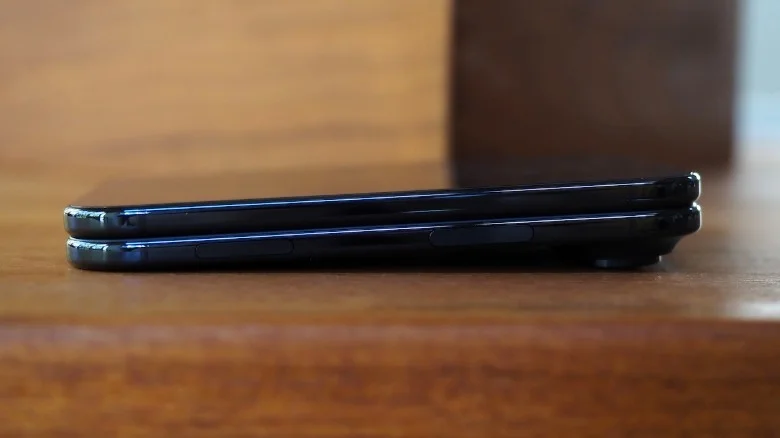 Chris Davies/SlashGear
A foldable built to start small
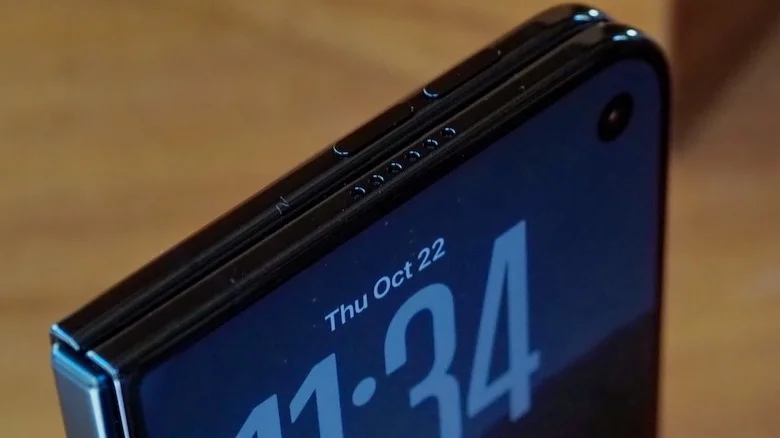
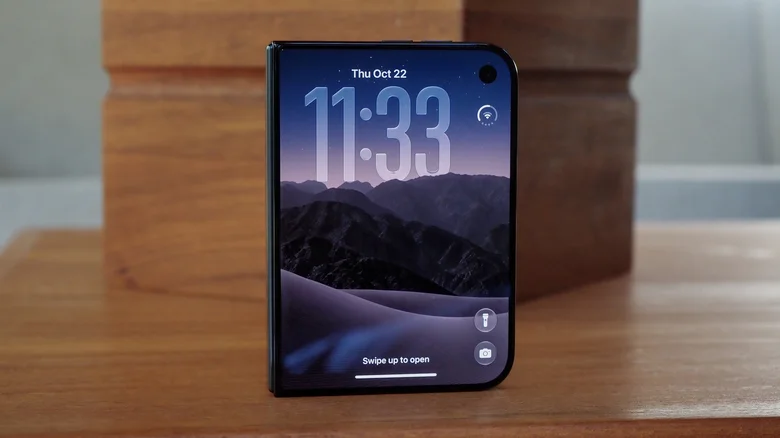
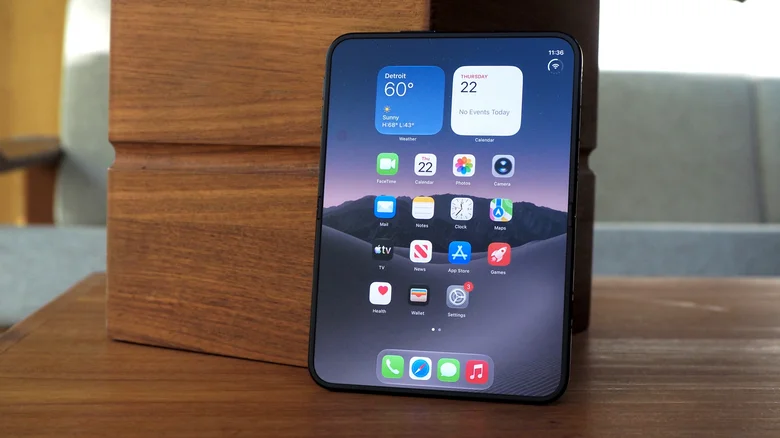
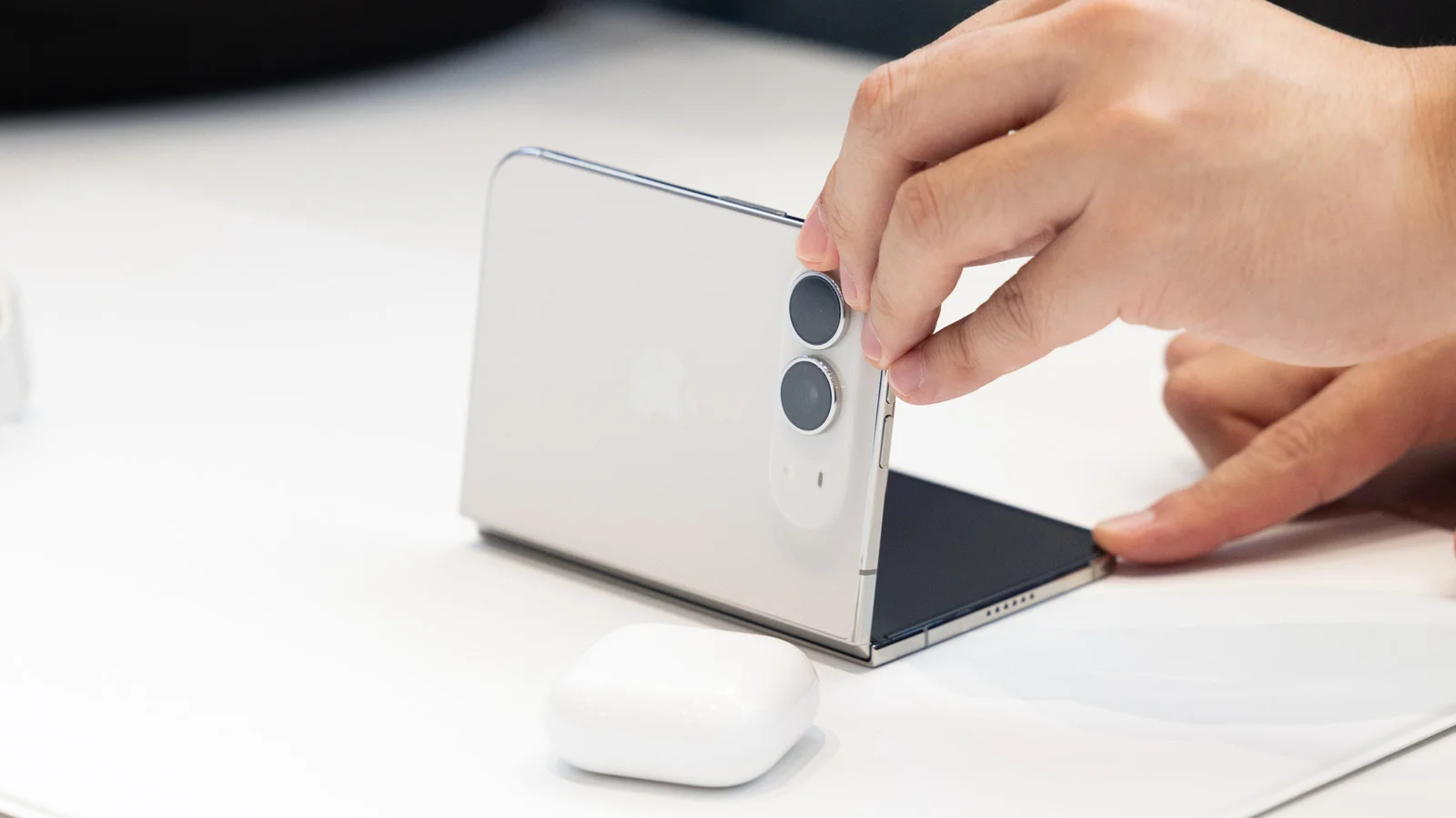
Many foldables make a large phone larger. The Duo takes the opposite tack: shut, it’s roughly wallet-sized, and its 11.3 mm thickness still sat comfortably in my front pocket. A case adds bulk, though, and I understand why owners might hesitate to carry a $1,999 phone without extra protection. Apple has added Ceramic Shield glass and IP68 dust and water resistance. Even so, the moving parts and flexible display made me handle it more carefully than a conventional iPhone. The hinge helps ease that concern: it opens smoothly, holds at a range of angles, and snaps closed with a magnetic click. Opening it takes two hands, but once it’s open, one-handed use felt much like holding an iPhone 18 Pro Max. At 254 grams, it’s Apple’s heaviest iPhone, by just five grams.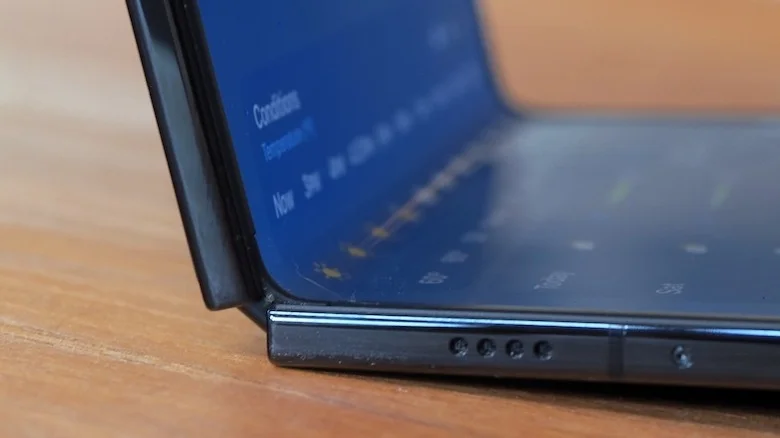 Chris Davies/SlashGear
 Chris Davies/SlashGear
The inner screen earns its keep
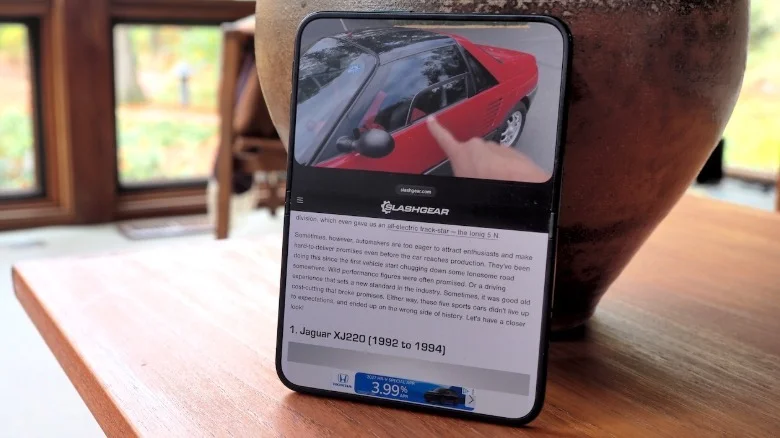
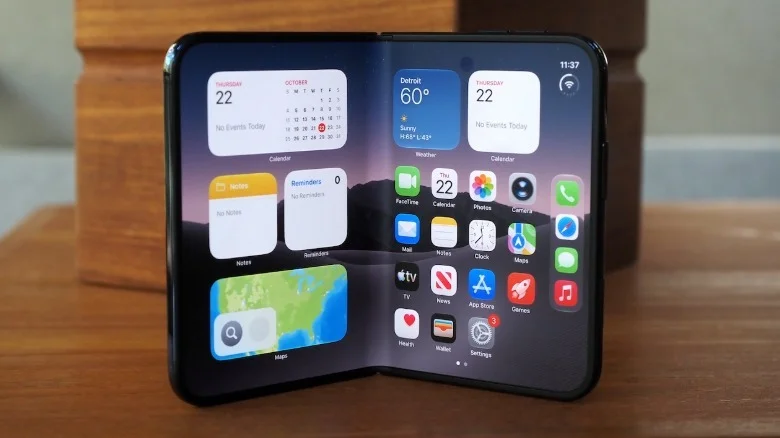
The reason to unfold the Duo is immediately clear. Its 7.6-inch flexible OLED display is a standout: the matte finish, which Apple calls nano-texture polymer, softens the crease and cuts reflections. Reading outdoors in direct sun was easy. With an Apple Pencil, the surface feels closer to paper, though only the USB-C model works, and the stylus tip catches slightly as it crosses the crease. Support for annotations and similar tasks arrived in iOS 27.2, after launch.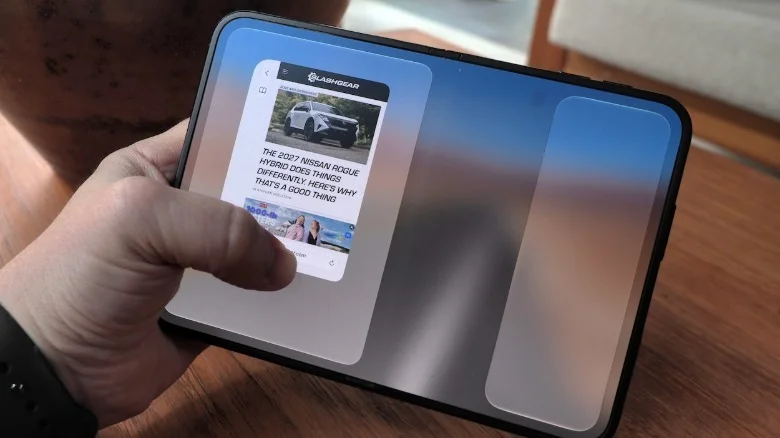 Chris Davies/SlashGear
 Chris Davies/SlashGear
The cover screen is more useful than expected
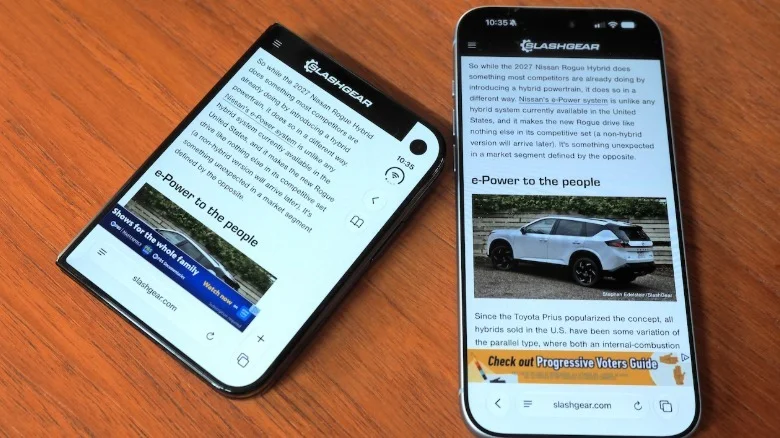
I’ve usually chosen the biggest iPhone available, so I expected the Duo’s 5.4-inch outer display to feel cramped. Instead, I often used it without unfolding the phone. Its short, wide shape works better than the taller, narrower 5.4-inch screen on the iPhone 13 mini. Part of that appeal may be psychological: the larger screen is always one unfold away. I expect to reach for it more as apps gain features designed for the Duo’s inner display. Apple’s own apps are already showing the way. Mail and Messages can put a message list beside its contents, while a pre-release version of Slack offered a desktop-like layout. Darkroom, a popular photo and video editor, also makes good use of the space.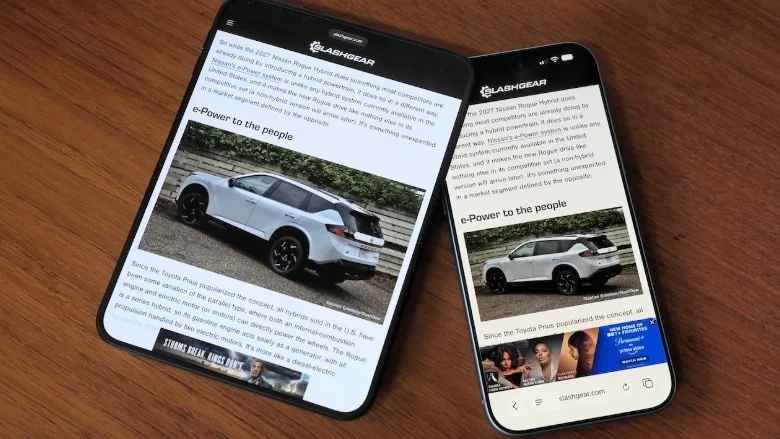 Chris Davies/SlashGear
 Chris Davies/SlashGear
The iPhone Duo’s strongest argument is simple: opening it gives you room to do more. Reading, browsing and video feel better on the larger screen, while email and Slack are easier to handle. For short trips, I can imagine packing a small Bluetooth keyboard and leaving the laptop behind. The 8.5-inch iPad mini offers more screen, but it still means carrying a tablet alongside a phone. That’s the compromise the Duo could remove.
Good cameras, with a clear tradeoff
 Chris Davies/SlashGear
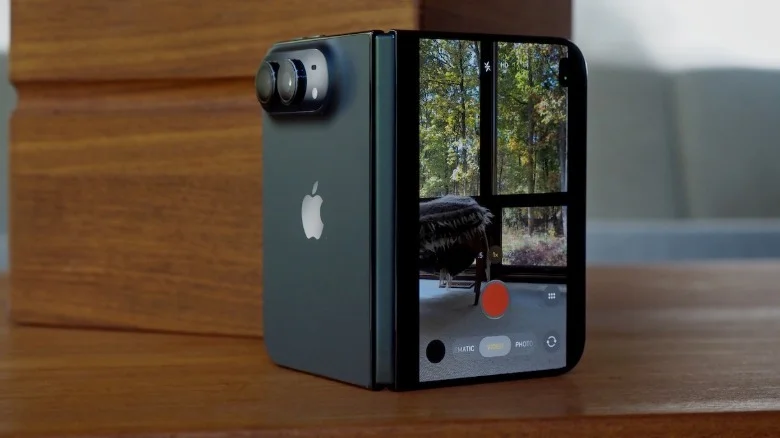
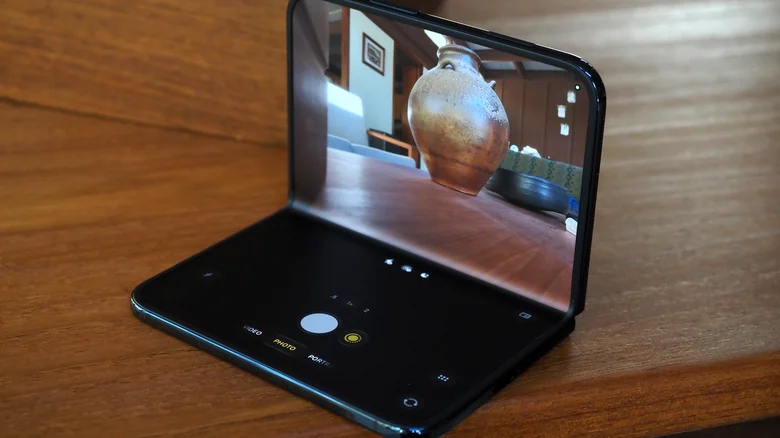
The camera system makes the foldable’s priorities plain. Its two exterior Fusion cameras are both 48 megapixels, one wide and one ultra wide, but the phone lacks the variable aperture and dedicated telephoto found on the iPhone 18 Pro Max. You get 2x optical-quality zoom, with software stretching that reach to 10x. That last step looks rough. If, like me, you use zoom often, the missing telephoto is hard to ignore.
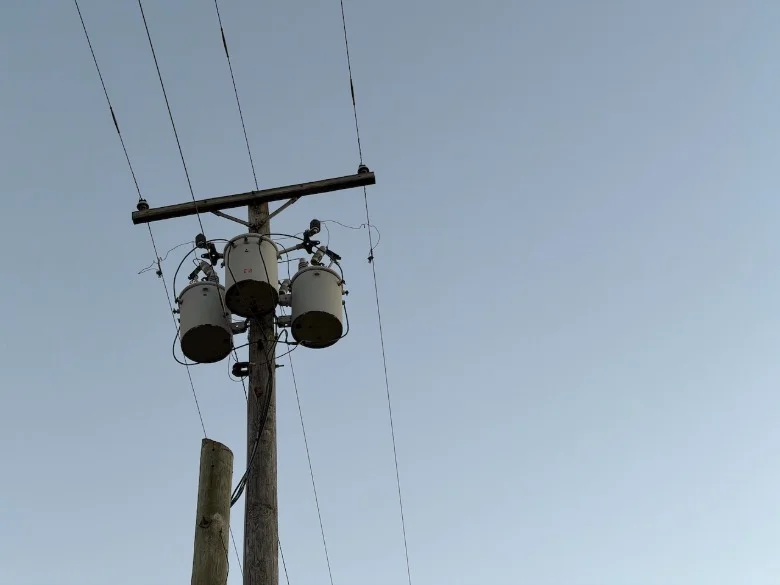
The inner-display FaceTime camera works for calls. For selfies, the sharper camera in the outer display is the better choice. Overall, the main cameras look much like those on last year’s iPhone 17 Pro, aside from the absent telephoto. I also prefer Apple’s restrained night shots: they preserve the sense of darkness instead of brightening every scene. In a sunset image, sandhill cranes remain crisp while a long exposure brings out texture in the darker fields, though page compression softens the example.
 Chris Davies/SlashGear
 Chris Davies/SlashGear
 Chris Davies/SlashGear
Battery confidence, repair anxiety
 Chris Davies/SlashGear
Apple estimates up to 24 hours of “typical use” from the Duo’s two batteries, based on aggregated owner data. I doubted that figure, but finished a heavy-use day with roughly half the charge remaining. The phone held securely to a MagSafe desk stand when folded; opened up, it sagged.
Most of the internals match the iPhone 18 Pro line: an A20 Pro chip, improved speed and heat management over last year’s phones, the latest Siri AI, and Messages via Satellite. Connectivity includes 5G, eSIM, Bluetooth 6 and Wi-Fi 7. Repair bills are the less comfortable part. Replacing the outer screen costs $379, while the inner panel is $999. Apple’s broad “other damage” charge is $1,499, a category that presumably covers the hinge. A replacement matte inner-screen protector costs $49.
 Chris Davies/SlashGear
A compelling first fold, at a steep price
 Chris Davies/SlashGear
The Duo has Apple’s most ambitious phone display, but that doesn’t make it the best iPhone for everyone. The tradeoffs go beyond cost: the iPhone 18 Pro Max has stronger cameras, Face ID, and a large screen that already handles most apps well. It’s also a phone I’d feel more comfortable carrying without a case.
Then there’s the price: $1,999 to start, rising to $3,199 for 2TB. That’s MacBook Pro money, which makes the $1,299 iPhone 18 Pro Max look comparatively attainable. The Duo’s appeal is real—some people love the folding design, while others can’t see the point. I’m glad Apple has made something this distinctive in a market lately crowded with big AI promises. As hardware, it’s fun and impressive.
 Chris Davies/SlashGear
Should most people buy one now? I wouldn’t make that case. The iPhone Duo feels like a device beside the flagship range, not a replacement for it; the iPhone 18 Pro remains the sensible all-round choice. Buyers with money to spare and a taste for early adoption will get excellent hardware, a beautiful screen and software with room to grow. Whether that promise turns into everyday value depends largely on how quickly developers build for it.
Discussion
Sign in to join the discussion.