Fifteen bands performed at the Florida Bandmasters Association’s District 10 assessment, turning a demanding evaluation into a showcase of student musicianship and teamwork.
Students bring months of preparation to the field
Fifteen marching bands brought months of rehearsal to the field Saturday at Space Coast Jr./Sr. High School in Port St. John, where the Florida Bandmasters Association held its District 10 Marching Music Performance Assessment. The event put student musicianship, coordination and performance discipline on display before a panel of adjudicators. Each band had to turn practice into a performance that could be seen and heard across the field, with musicians, visual elements and movement working together.
A marching assessment is a demanding format because musical accuracy is only part of the task. Students must keep time and formation while moving, respond to cues and maintain the character of the show through transitions. When one section shifts or loses alignment, the effect can carry across the ensemble. The result is a public test of preparation under pressure, with little room to pause and reset.
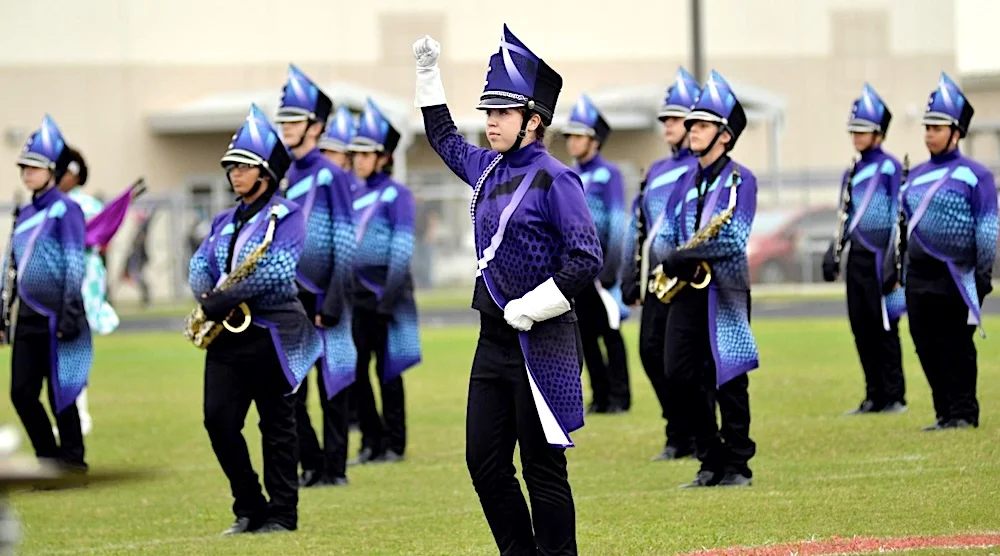
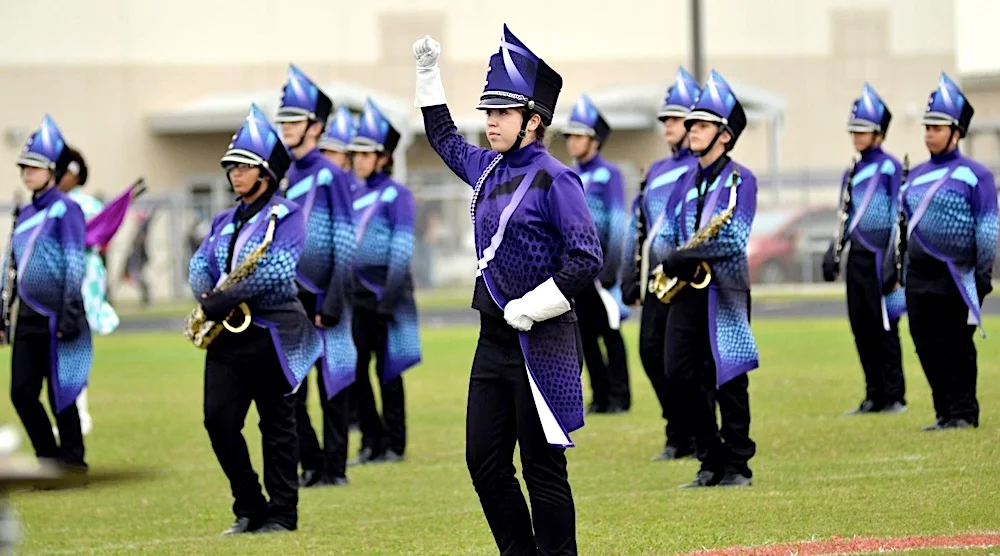
ABOVE: The Space Coast Viper Marching Band performs in purple-and-teal uniforms. Its drum major signals the next movement as musicians hold formation with their instruments. (John Zachary Danao/APA image)
A full district lineup
Space Coast Jr./Sr. High School’s Viper Marching Band opened the performances, followed by Palm Bay Magnet High School’s Marching Pirates, Cocoa Jr./Sr. High School’s Tiger Regiment and Cocoa Beach Jr./Sr. High School’s Marching Minutemen. Opening a program places a band in the position of setting the day’s pace, while the sequence gives audiences a chance to see distinct ensembles work through the same basic demands of timing, movement and musical presentation.
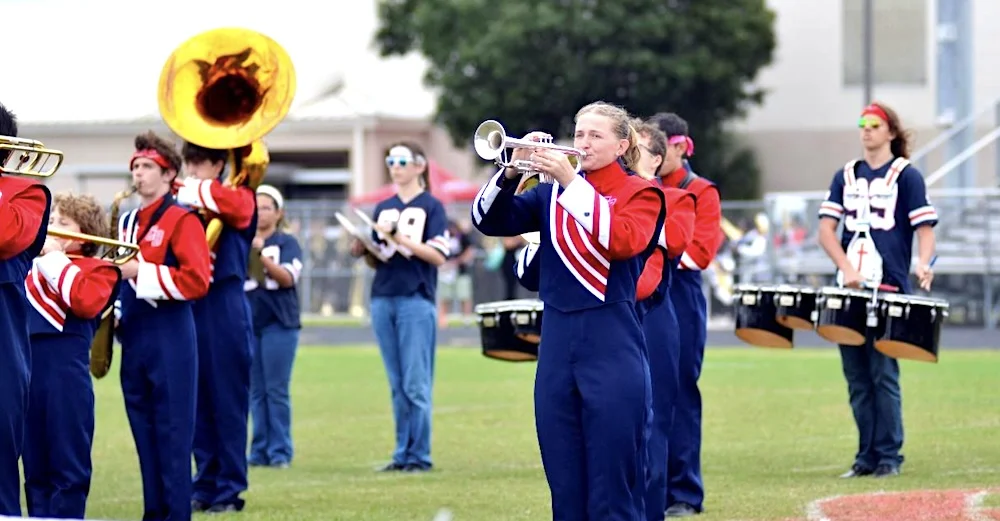
ABOVE: The Cocoa Beach Jr./Sr. High School Marching Minutemen perform in red, white and blue uniforms. (Photo courtesy of John Zachary Danao/APA)
The program continued with Odyssey Charter School’s Titan Marching Band and Satellite High School’s Scorpion Sound. Astronaut High School’s Pride of the Sky Marching War Eagles, Eau Gallie High School’s Marching Commodores, Merritt Island High School’s Marching Mustangs and Rockledge High School’s Raider Regiment followed. A long roster makes the event more than a series of isolated performances: it brings students from across the district into one shared setting, where each group’s preparation is visible to peers, families and adjudicators.
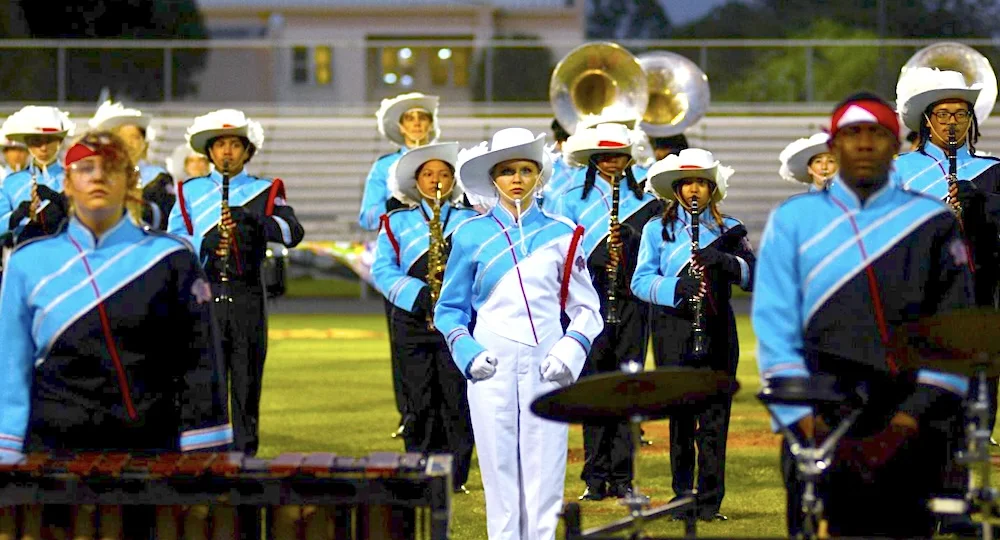
ABOVE: Rockledge High School’s Raider Regiment performs in light blue, black and white uniforms, with its musicians and drum major in formation. (Photo courtesy of John Zachary Danao/APA)
Later performances came from Spruce Creek High School’s High Steppin’ Hawks, Viera High School’s Marching Hawks, Titusville High School’s Terrier Sound, Melbourne High School’s Pride of Mel High and Heritage High School’s Marching Panther Band, also known as The Blue Sea of Sound. The succession offered a broad view of the district’s school programs, while the format held each group to the same central challenge: present a coordinated show from first cue to final note.
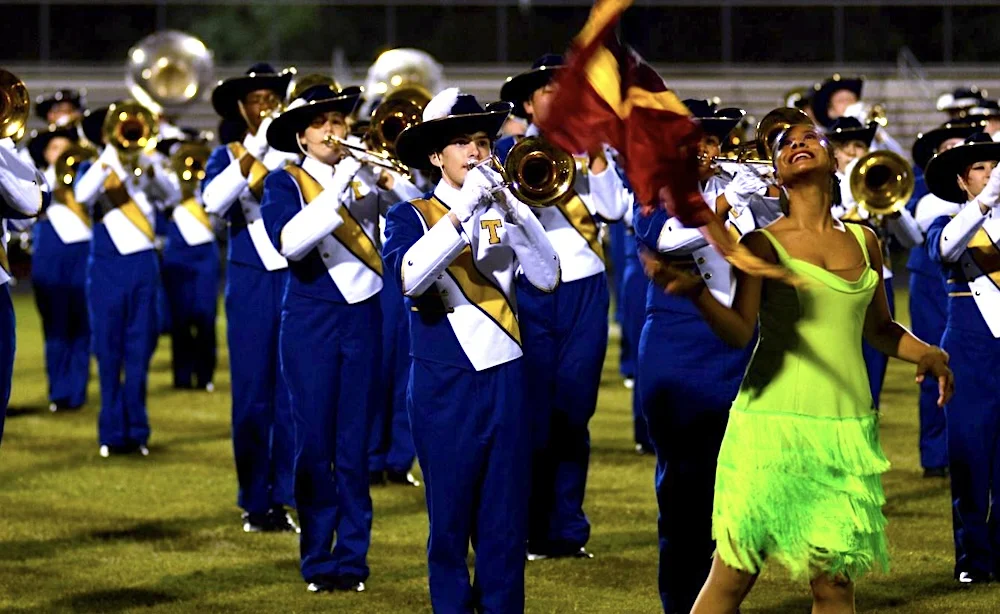
ABOVE: Titusville High School’s Terrier Sound performs in blue, white and gold as the color guard moves flags beneath the stadium lights. (John Zachary Danao/APA image)
Performance under pressure
Each group faced the demands of a judged field performance: maintaining alignment across the yard lines, executing visual transitions and sustaining musical detail. The source account describes a cool breeze over the turf and a tense wait before the first band began, conditions that sharpened the focus on preparation and precision. A performance setting also changes how small errors feel: students must keep listening and adjusting while the show continues around them.
That pressure is part of what makes marching music a team discipline. The drum major’s cues, the musicians’ timing and the color guard’s movement all contribute to the same presentation, so individual skill has to serve the ensemble. And this is the part most people overlook: the visible formations depend on careful listening as much as on watching the field.
As the afternoon moved toward dusk, the program shifted from the opening performances to a sustained run of brass, percussion and visual work. The stands grew louder as Melbourne took the field, before Heritage closed the event with a performance the account describes as a broad, resonant wall of harmony. A final performance carries the weight of the day’s accumulated attention; the closing band has to hold the crowd while delivering its own planned show.
Some details are easy to see from the stands: uniforms, flag work and formations. The musical balance and coordination behind them take more attention. For the students, though, both layers matter. The show has to read clearly at a distance and remain controlled from within the ensemble.
Why the assessment matters
The assessment brought together students, band directors, instructional staff and parents around a shared performance. Its larger value, beyond any rating or award, was visible in the coordination required to put each show on the field—and in the community support behind the students’ work. That is a more meaningful measure than spectacle alone: the performance reflects hours of instruction and practice, even when the audience sees only the finished minutes.
This is more significant than it looks. A district event gives programs a common occasion to demonstrate their work and gives students the experience of performing before adjudicators and a crowd. The article doesn’t provide ratings or detailed adjudicator feedback, so the day’s competitive results can’t be assessed from this account. What it does show is the shared labor behind the performances.
If you're working in this space, the broader lesson is familiar: a strong field show depends on consistency across music, movement and communication. That standard reaches beyond the final notes. A student has to recover from a missed cue, maintain focus through a transition and remain part of the group’s sound. Rehearsal pays off in those moments when the performance keeps moving.
A full day of performances. A field shared by fifteen school bands. The assessment offered students a public measure of their preparation and gave families a chance to see that work take shape.
The post 15 Bands Perform in 2026 FBA District 10 Marching MPA, Hosted At Space Coast Jr./Sr. High School appeared first on Space Coast Daily.



Discussion
Sign in to join the discussion.