Fake tearful TikTok stories are selling GLP-1 trackers and wellness apps, while developers and marketers offer differing accounts of who made them.
Fake intimacy has become a sales pitch for a growing set of wellness apps on TikTok. AI-generated women cry over family messages, breakups and relationship troubles, then display notifications for apps that promise to track medication or offer emotional support. The posts often look like personal stories, but the app promotions and synthetic imagery aren’t disclosed.
The format draws viewers into a scene built to feel private: a confession, a message from someone close, and a moment of reassurance. That emotional setup can make a product placement look like a recommendation from a real person. In some cases, commenters appear to accept the stories as genuine.
Medication reminders wrapped in family drama
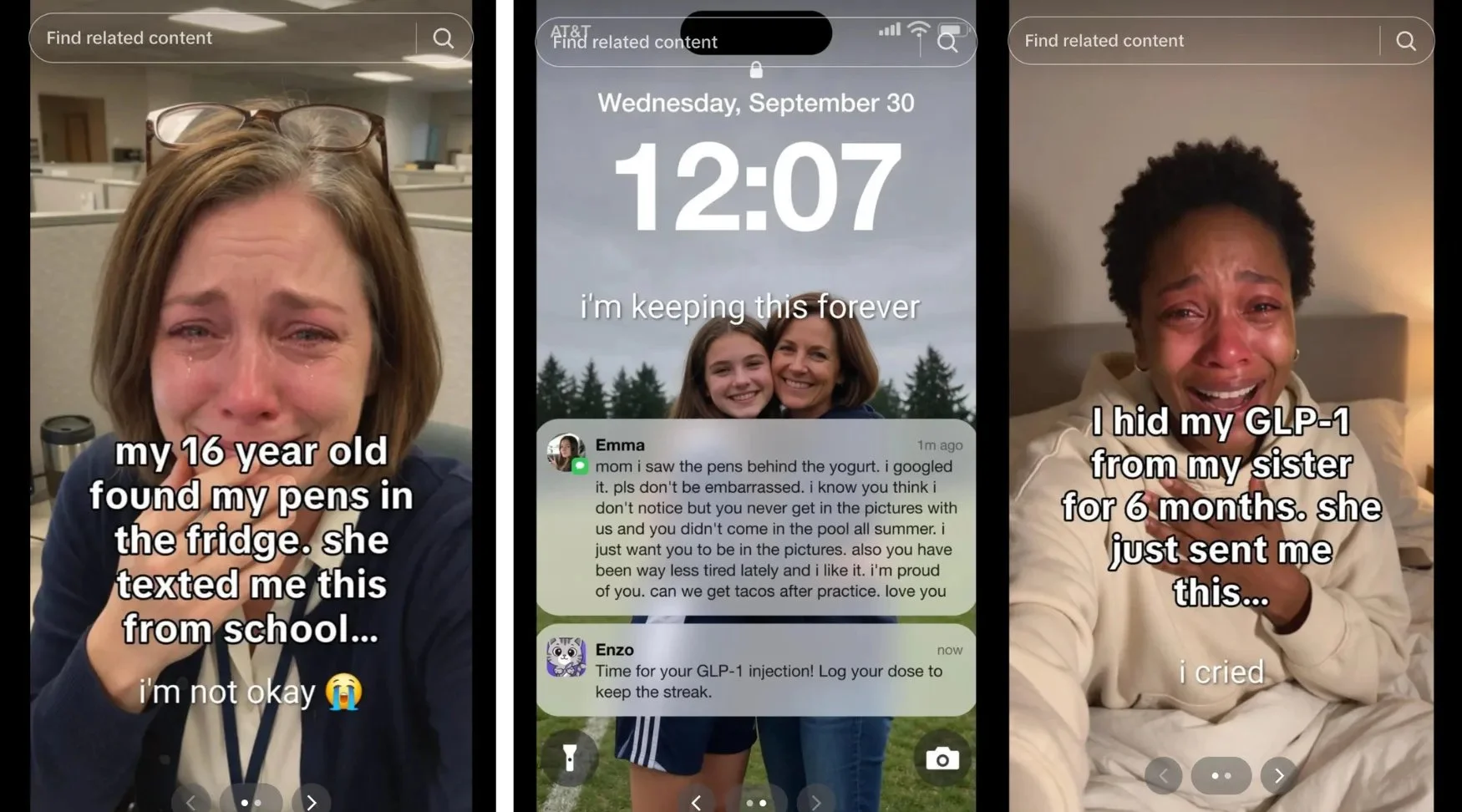
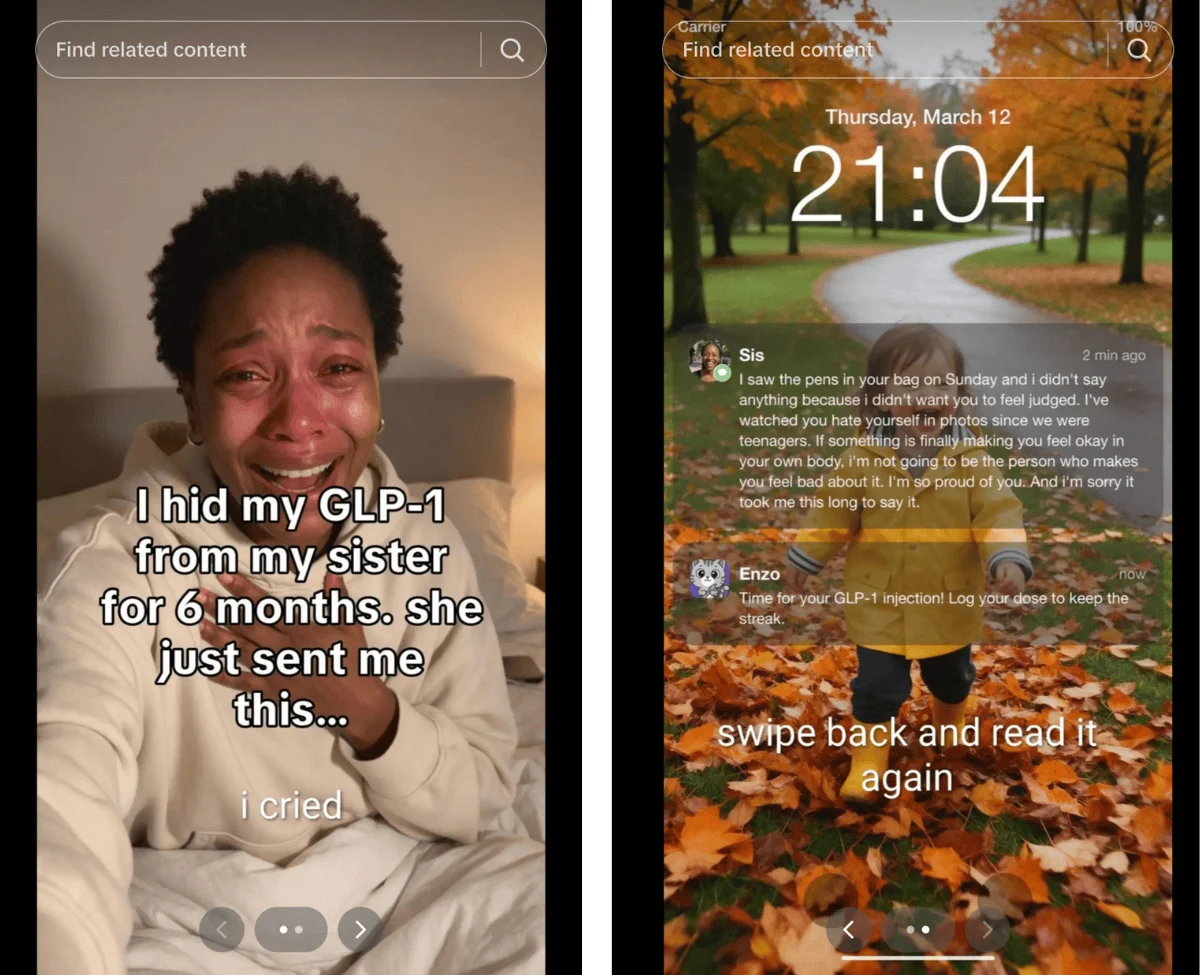
A TikTok account called WellWithHer posts images of AI-generated women who say they’ve been hiding GLP-1 injections from relatives. One carousel shows a woman crying in bed after, according to its caption, her sister found her medication. A purported text from “Sis” says she noticed the pens, didn’t want the woman to feel judged, and was proud that she was feeling better in her body. Below the message, an Enzo notification prompts the user to take a GLP-1 injection and log the dose to maintain a streak.
Another post follows a similar script, this time with a daughter named Emma who supposedly finds her mother’s GLP-1 medication in the refrigerator. The message says she wants her mother in family photos and at the pool, adds that she seems less tired, and suggests getting tacos after practice. An Enzo dose reminder again appears alongside the family exchange.
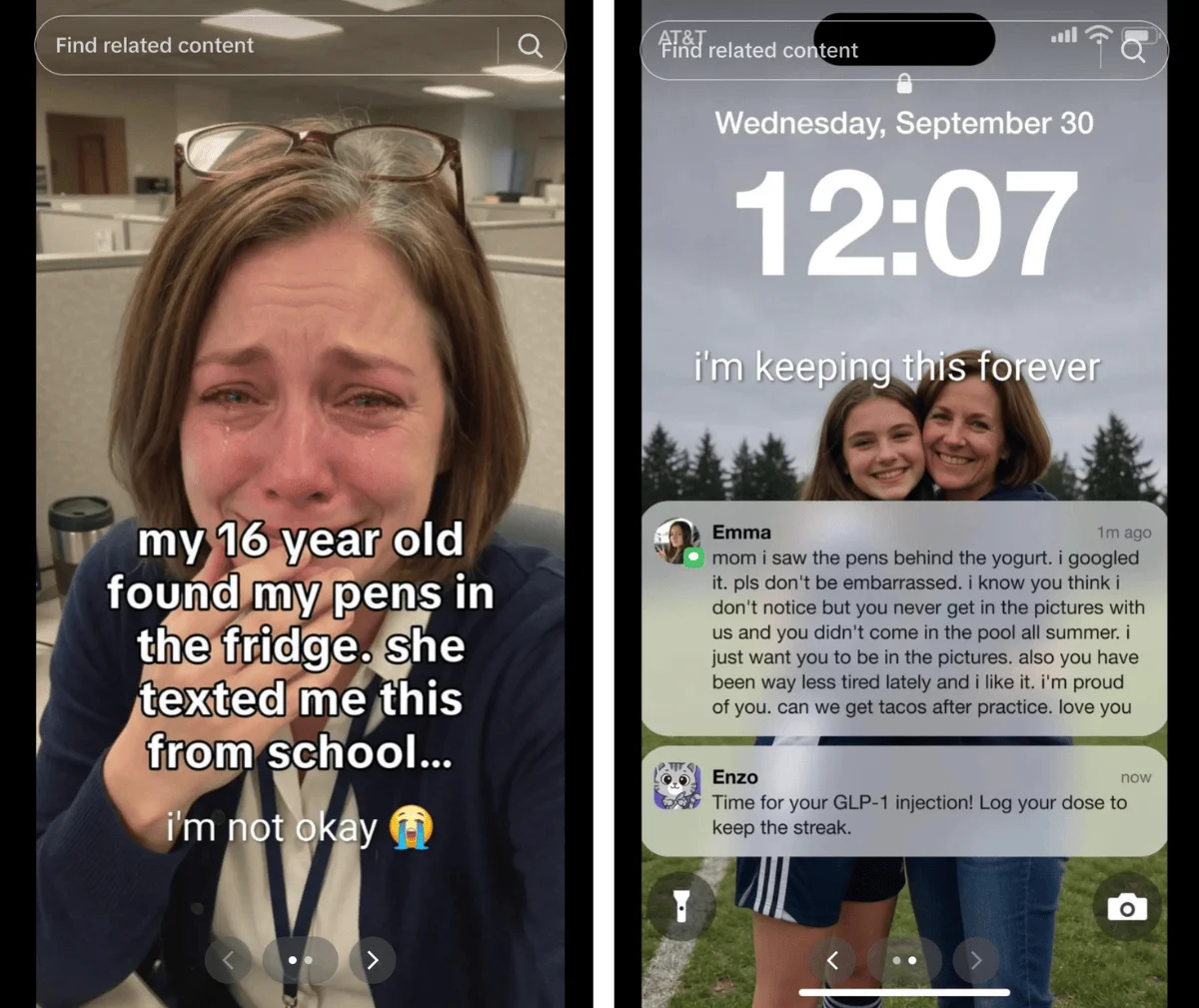
The app is positioned inside a validation fantasy: a person who has kept medication use secret is unexpectedly met with acceptance from someone they love. The staged messages and the women shown in the images are presented as authentic personal experiences, though the accounts provide no disclosure that the scenes are fictional or AI-generated. Enzo isn’t the only GLP-1 tracker promoted this way.
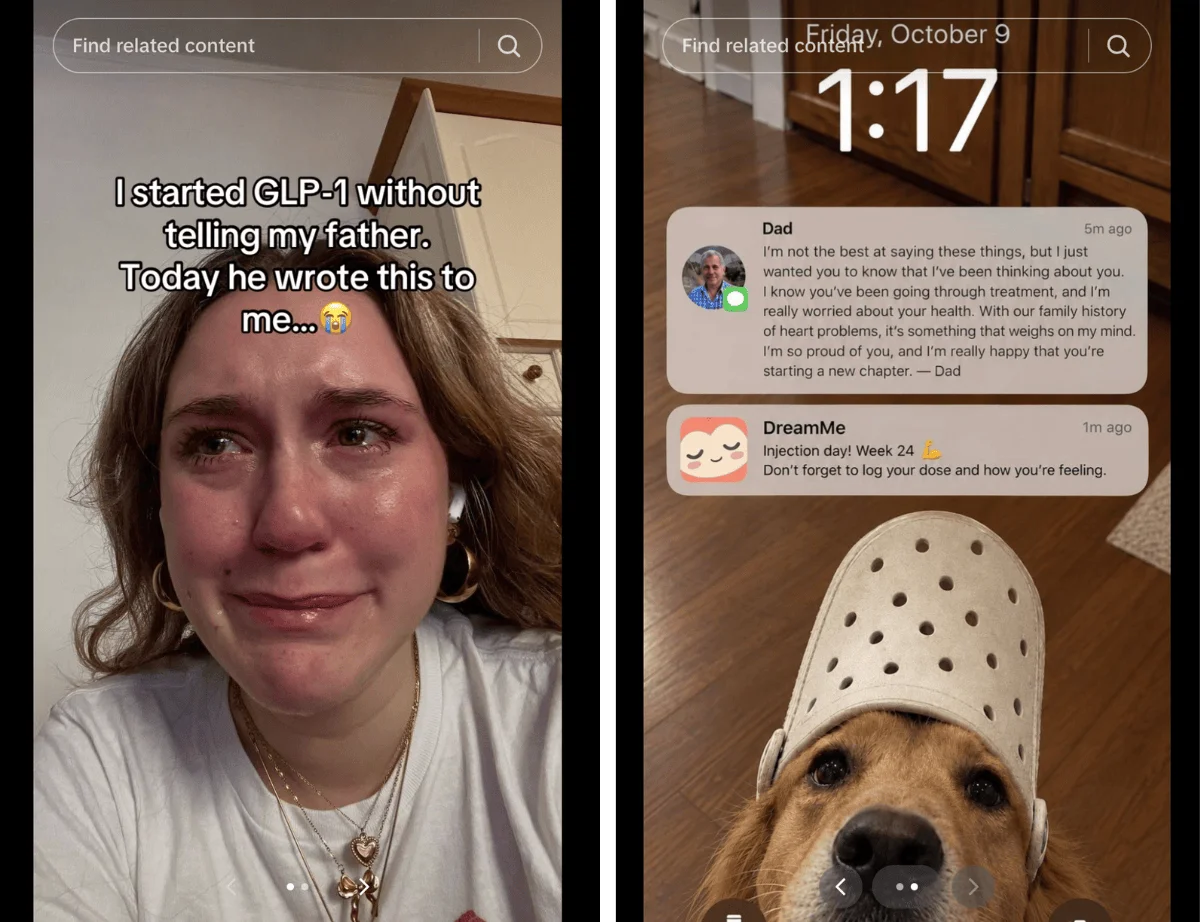
A separate TikTok account, using the name Lara, mixes images of real influencers with AI-generated pictures to promote DreamMe. One post shows a crying young woman saying she began GLP-1 treatment without telling her father. The next slide displays a supposed message from “Dad,” expressing concern about her health and a family history of heart problems, then saying he’s proud of her.
DreamMe’s own website describes its product as a “new GLP-1 best friend”: a cartoon fish called Sushi that helps users track medication. The site also presents AI-generated women as real customers who have lost weight with Sushi’s help. Its page says, “Real journeys. Real members,” adding, “The numbers are theirs. The words are theirs. We just built the fish.” The promotional TikTok content raises a direct question about how a company presents customer stories when the people pictured are synthetic.
The same playbook reaches mental wellness apps
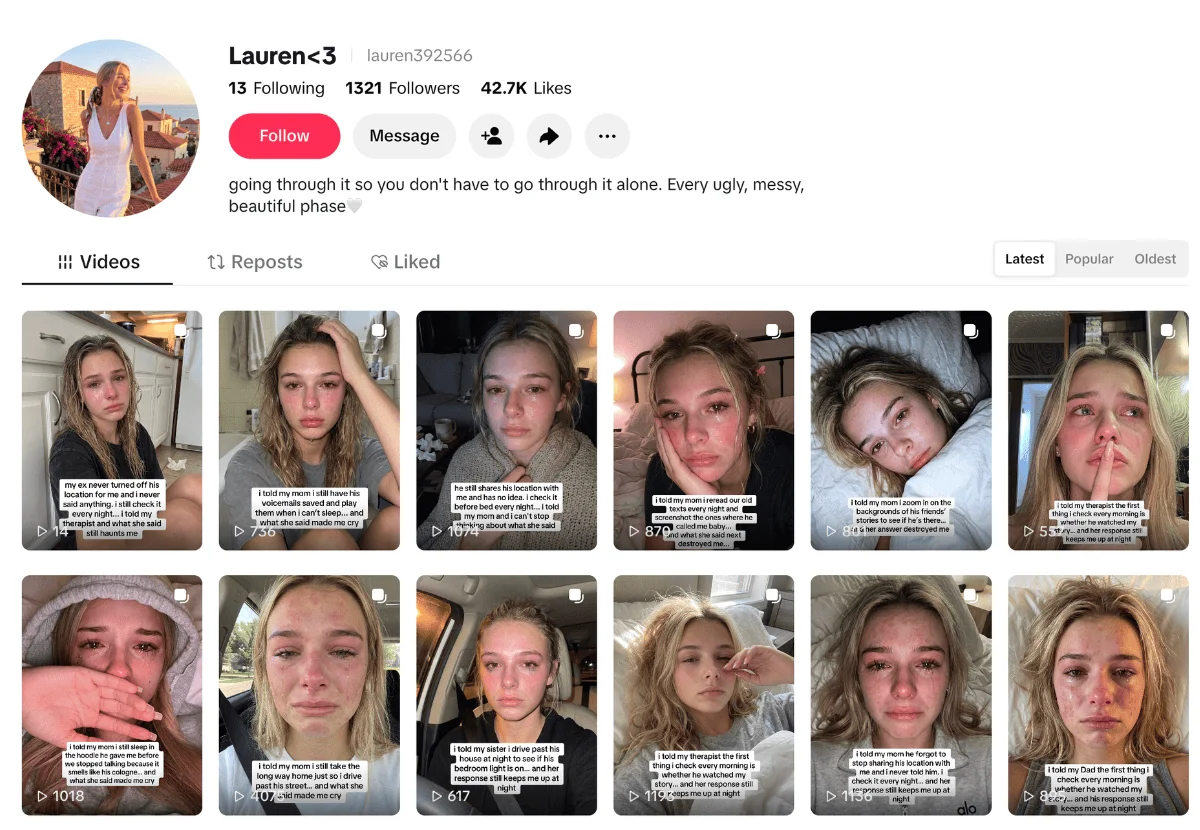
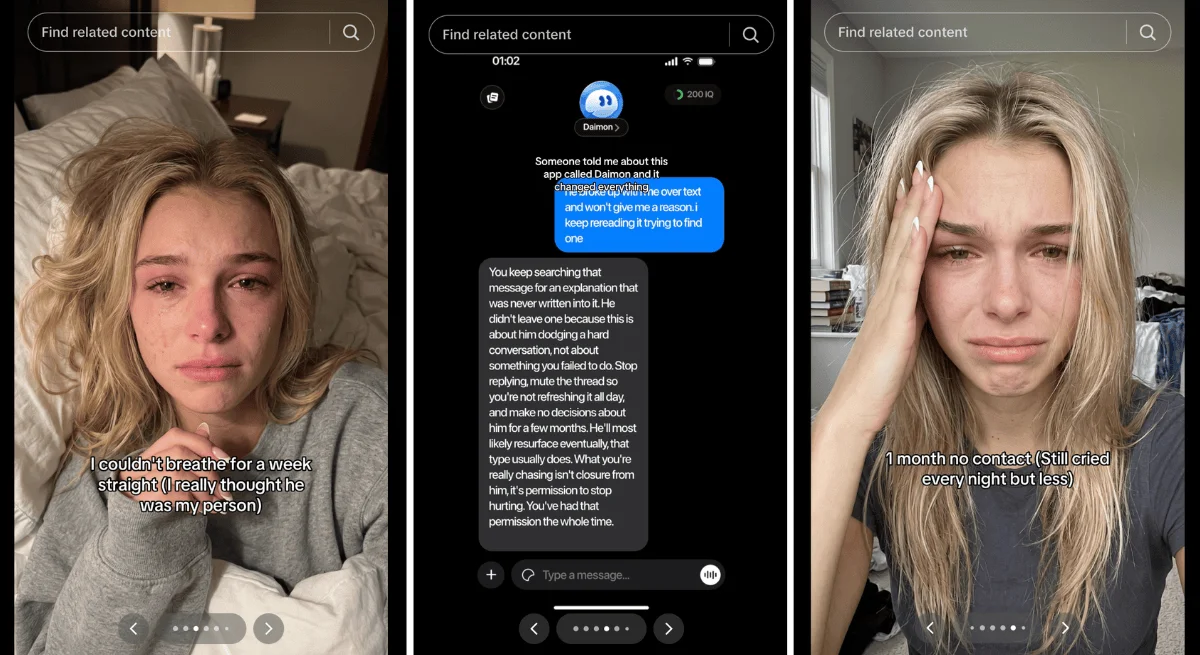
The tearful testimonial format extends beyond medication tracking. An account called Lauren<3 posted a stream of AI-generated breakup scenes: a woman in a bathtub, bed or car, mascara running as she described going no-contact with an ex. Alongside alleged texts from the former boyfriend, the posts included screenshots of conversations with Daimon, an AI companion app. The fictional poster called it an app that had “changed everything” and said it was the one app that wouldn’t judge her.
Another account, Ashley Miller, used fabricated stories about divorce, infidelity and an engagement to promote Zenit, a wellness app for guided support, daily check-ins and emotional growth tracking. One post, which drew more than 240,000 likes and over 1,000 comments, showed an AI-generated woman holding up an engagement ring in front of the Eiffel Tower. A purported message from her fiancé’s mother warned that she recognized troubling behavior from her own marriage and urged Ashley to ask about her fiancé’s previous relationship. A Zenit notification beneath the message said, “Your heart’s been racing. I’m here whenever you need me.”
The app’s presence in each post identifies the sales purpose, but it doesn’t necessarily tell viewers that the characters and exchanges are invented. At least one commenter took the engagement story at face value, advising the woman to run and saying the mother was trying to protect her.
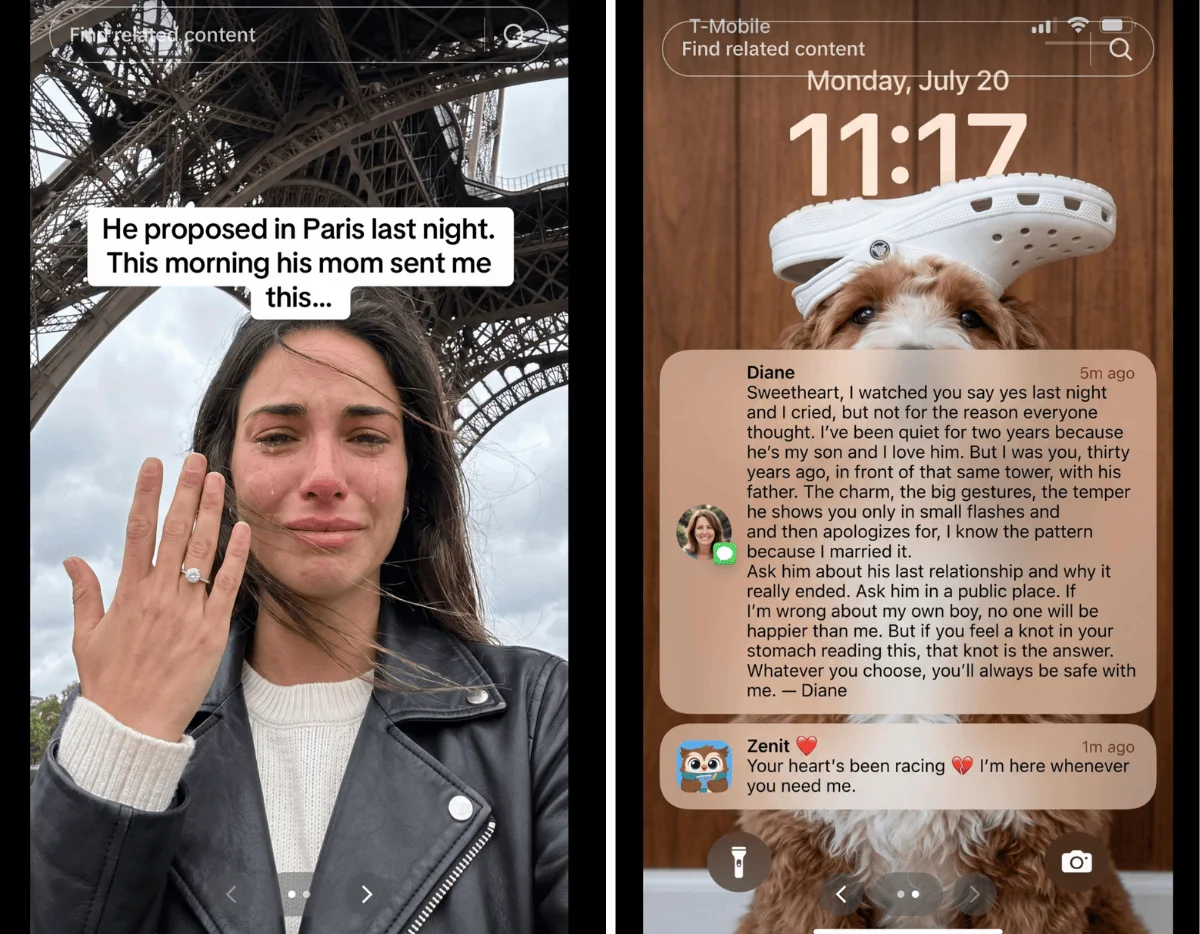
Across these accounts, the details vary but the emotional mechanics stay close: an imagined crisis, a sympathetic message and a product notification. Some posts across separate accounts even use strikingly similar images of dogs wearing Crocs as phone wallpapers. The resemblance suggests a shared style of content production, though it doesn’t establish who operates each account.
Developers respond after questions
After being contacted about the posts, the Zenit TikTok account was deactivated. Developer Pedro Pérez said he ran it himself and that no third-party marketing agency was involved. He said the videos drew on situations people experience and were intended to help viewers feel understood while introducing them to the app. Pérez acknowledged that the visuals were AI-generated and the posts promoted Zenit, and said they should have been labeled that way. He said he deleted the account because TikTok wouldn’t let him add AI and commercial-content labels to videos that were already published.
The account promoting Daimon removed its content after questions were sent and changed its handle from Lauren<3 to “yooo.” Prospinity, the company behind the companion chatbot, said the account wasn’t operated by its internal marketing team and that the posts weren’t created or approved by the company. It said external affiliates had published independently through accounts the company didn’t directly manage, and that it had identified those responsible and taken steps to stop the activity.
DreamMe didn’t respond to questions sent to email addresses listed on its website. An email to Enzo bounced, and the TikTok accounts associated with those apps didn’t reply. The accounts continued posting: the Enzo promoter began advertising a peptide-tracking app, while the DreamMe account shifted to a phone-locking app.
The pattern matters because wellness products are being introduced through stories that borrow the credibility of personal disclosure. A notification or app name may reveal the commercial aim, but viewers still have to recognize that the people and conversations may be synthetic. Clear labeling is the minimum needed for audiences to judge whether they’re watching a testimonial, a fictional scenario or an advertisement.
More on fake people online: How Three Brothers Built an AI Slop Empire by Buying Legitimate News Sites and Turning Them Into Zombie Content Farms That They Say Get 50 Million Page Views per Month
The post GLP-1 Apps Are Using Sobbing AI-Generated Women To Market Their Products appeared first on Futurism.
Discussion
Sign in to join the discussion.